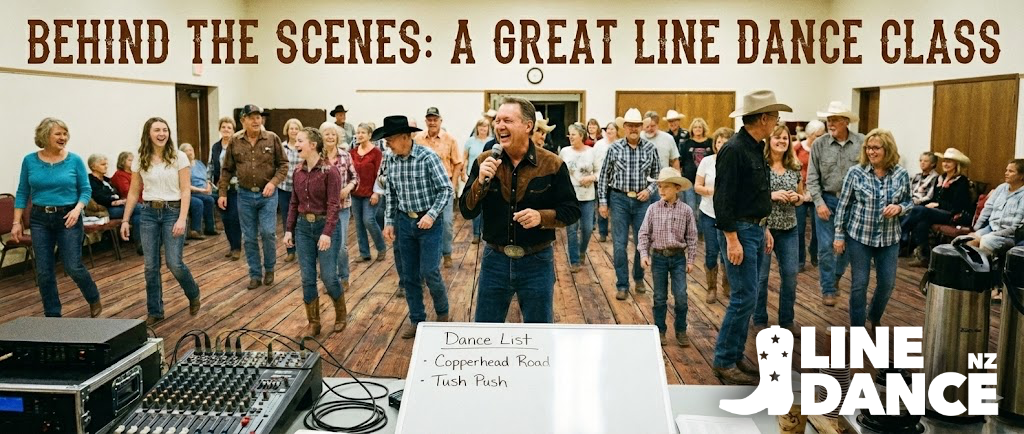

Behind the Scenes of a Great Line Dance Class
When line dance is going well, it looks easy: good music, lots of laughs, and a room moving together. But the best classes don’t just happen. There’s a lot of work on one side, and a lot of small “good habits” on the other.
So here’s a casual two-sided guide: how to be a good teacher (including all the stuff people don’t see), and how to be a good pupil (the etiquette and attitude that makes class better for everyone).

How to be a good teacher (aka: the stuff nobody sees)
1) There’s way more prep than people realise
Before class even starts, teachers are often:
- hunting for dances that will actually suit the group
- watching demos, checking step sheets, spotting tags/restarts
- learning it properly (so they can teach it clearly, not just “do it”)
- figuring out how to explain the tricky bits
- building playlists and checking the song actually works in a room
A good class is curated. It’s not just “here’s a dance, next dance”.
2) Pick dances for your dancers, not just own taste.
It’s easy to get sucked into what’s trending online, but good teaching is about the room in front of you:
- mix new stuff with familiar favourites
- don’t level-creep (beginner class slowly turning into improver)
- think about pace and complexity (turns, pivots, syncopations, tags)
- offer options: “if you don’t pivot, just step” is totally fine and all-inclusive...
You want people leaving class feeling like they achieved something.
3) Teach the room you’ve got (mixed levels are normal)
Most classes have a mix. Some ways to keep it smooth:
- say the level up front (“this is improver, there’s a tag”)
- break down foundations when needed (weight changes, rock steps, coasters)
- keep experienced dancers engaged by talking technique and timing
- don’t rush because a few people already know it
A class that feels welcoming keeps people coming back.
4) Clear beats clever
The best teachers usually do the simple things really well:
- consistent counts and language
- cue early (people need time to react)
- repeat calmly
- break tricky parts into small chunks, then rebuild
If half the room is confused, it’s not a “them” problem. It’s a “try explaining it a different way” moment.
5) Set the vibe (this is a big one)
People remember how class felt.
- learn names when you can
- encourage questions without making anyone feel dumb
- celebrate effort, not perfection
- make it safe to be a beginner
The teacher sets the tone. A friendly room is built on purpose.
6) Music + playlists + licensing (boring, but real)
Teachers often spend ages finding songs that fit the dance properly — and there’s also the licensing side of playing music in public/class settings. (Not legal advice — just a reminder that “music for class” has a practical/admin side too.)
7) Equipment and logistics matter more than people think
A smooth class often comes down to the boring stuff:
- good speaker, good volume, no crackly cables
- arriving early enough to test audio
- safe floor (no slippery patches, no bags in the way)
- sensible spacing so people aren’t colliding
When the setup is good, learning is easier.
8) Socials and community take effort
Social nights, theme nights, beginner-friendly events… all of that is work. If you’ve ever wondered why teachers push socials — it’s because community is what turns a class into a group people stick with.
How to be a good pupil (aka: the dancer everyone loves having in class)
This isn’t about being the best dancer. It’s about being someone who makes the room better.
1) Dance floor etiquette: the basics
- No drinks or food on the floor (spills are a real hazard)
- keep bags/jackets off the dance area
- be aware of arms/turns/travel when it’s crowded
- if you need to stop, step to the side rather than freezing mid-line
- if you bump someone: quick apology, reset, keep going
Safety is a shared job.
2) Help class flow
- listen to the walk-through (even if you think you know it)
- don’t chat over the teaching bits
- ask questions, but try to time it well (after a run-through is great)
- if you’re lost, keep moving gently and pick up what you can — it comes
No one learns faster because they feel stressed.
3) Practise smart (not just “more”)
If you want to improve quickly:
- practise the tricky section first (often it’s the tag/restart area)
- count it without music, then add music
- focus on weight changes and timing before styling
- don’t be shy to ask for the dance name/step sheet so you can revise
4) Respect levels (and be brave sometimes)
- don’t pressure a beginner class to speed up or get harder
- don’t go into improver and expect beginner teaching pace
- try a new style sometimes (waltz, cha cha, funky, smooth — it all helps)
- celebrate small wins (clean basics are a huge win)
5) Support others in the room
This is where the magic is:
- say hi to newcomers
- smile and make space
- help someone find the right line
- don’t “correct” people unless you’re asked (it can feel awful)
- give props when someone nails a section they’ve been struggling with
A welcoming room doesn’t happen by accident. People create it.
The whole point
Great classes happen when:
- teachers put in the prep and create a friendly structure
- pupils bring good etiquette, effort, and kindness
- everyone treats the floor like a shared space
That’s how you get the kind of class people look forward to all week.